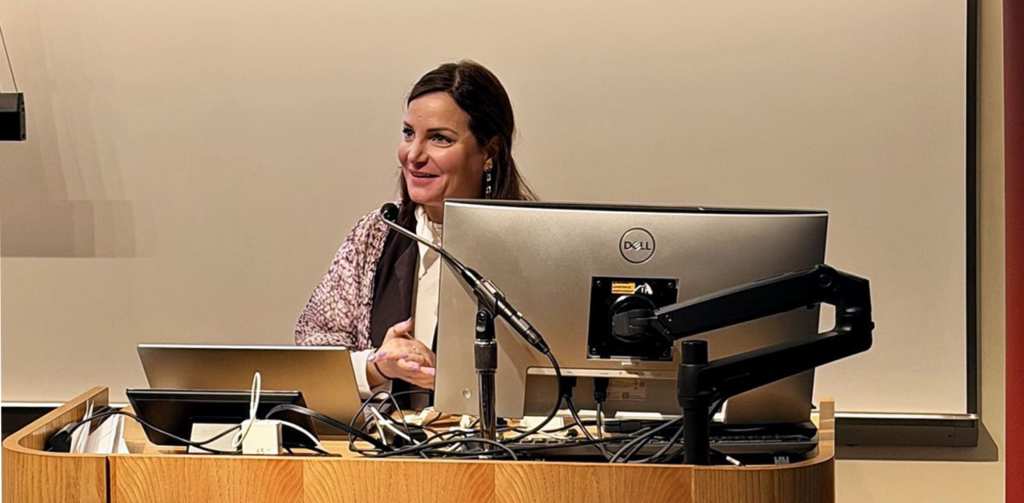
The 3rd Annual AMCF Nonprofit Summit, held in partnership with ISNA, brought Muslim nonprofit leaders together at Huntington Place in Detroit on September 3, 2026. IFTANA, the Islamic Finance Trade Association of North America, was represented on the program by two of its founding board members.
Eaman Shebley, Founder and CEO of TACS, moderated the session “Strategic Financial Strategies for Nonprofits.” Ahmad Quqa, Founder and CEO of Crescent Private Wealth, joined the panel.
The session took up a question most nonprofit boards are not asked often enough. Every board can say what its money is for. Fewer can say what it is in, or whether the way it is held will outlast the people who built it.
Eaman Shebley framed the opportunity as turning more of the community’s generosity into lasting institutional capital, and asked how Muslim families and donors can be moved from thinking about what they give today to what their wealth can sustain for generations. Ahmad Quqa’s answer drew on his daily work across the table from families as a financial adviser. Annual giving and generational giving come from two different pockets, he said. One comes from cash flow. The other comes through estate and tax planning built years in advance, and very few Muslim families are having those conversations with a professional at all. His question back to the room was how many nonprofit leaders ever speak to the accountants, advisers, and estate attorneys of their top donors. A few lines in a planned giving document cost the donor nothing today and can fund an institution for decades.
Eaman Shebley then asked what responsibility an organization takes on once a family has entrusted capital to it. Ahmad Quqa, who has served on nonprofit boards for more than a decade and has managed an endowment since 2018, said that at that point the question is no longer about investment management. “It is a governance question. It almost always is.” Boards turn over, and priorities shift. The governing documents, the bylaws and the investment policy, are what remain, and a donor weighing a seven-figure planned gift wants to know that a board twenty years from now will honor what is decided today.
For IFTANA, the session matters beyond the day. Islamic finance in North America is usually discussed as a set of banking and investment products. The nonprofit sector shows how much further it reaches. Masjids, schools, relief organizations, and community foundations hold reserves and endowments, and the decisions about how those funds are managed are made by boards and finance committees every year. Bringing sound, principled financial management to those decisions is part of the work IFTANA was founded to support.
IFTANA thanks AMCF and ISNA for convening the summit.
Membership in IFTANA is open to institutions, individuals, and students. Learn more at iftana.org/membership.